Solid State Physics
Affiliate link — we may earn a commission. Learn more
Solid State Physics – Sana Muhammad din
Free Udemy course – Updated July 2026
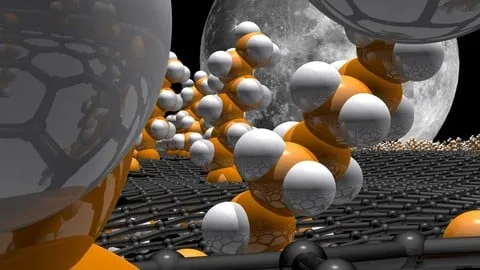
Dive into the fascinating world of solid‑state physics with Solid State Physics taught by Sana Muhammad din. This free Udemy course covers atomic‑scale material behavior, crystal structures, band theory, and superconductivity, delivering practical skills for modern technology. Learners gain a solid foundation for academic research, engineering design, and industry certifications. The curriculum blends theory with real‑world applications, making it the ideal online course for anyone seeking a comprehensive solid‑state physics tutorial in 2026.
What You'll Learn
- Build a systematic classification of solids, distinguishing metals, ceramics, polymers, and composites based on atomic arrangements.
- Master crystal lattice concepts, including Bravais lattices, Miller indices, and symmetry operations influencing material properties.
- Learn mechanical properties such as elasticity, plastic deformation, and hardness, applying them to engineering material selection.
- Understand phonon dynamics and thermal conductivity, enabling analysis of heat transfer in semiconductor devices.
- Create electronic band structures, explaining conductivity, semiconductors, and insulators for modern electronic design.
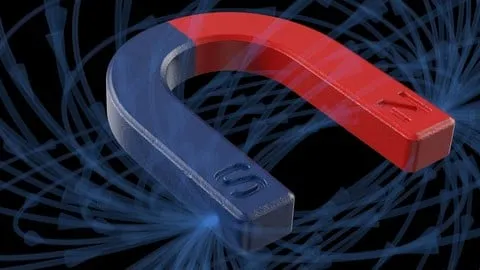
- Implement magnetic ordering principles, exploring ferromagnetism, antiferromagnetism, and their roles in data storage technologies.
- Analyze superconductivity phenomena, describing Cooper pairs, critical temperature, and applications in magnetic resonance imaging.
Course Details
- Instructor: Sana Muhammad din
- Rating: 4.9 stars (1626 reviews)
- Language: English (en‑GB)
- Enrolled students: 1,626
- Certificate: Yes, upon completion
- Includes: Lifetime access, mobile‑friendly videos, downloadable resources
What This Course Covers
Classification of Solids
- Definitions and examples of crystalline, amorphous, and quasicrystalline materials.
- Physical property trends across different solid categories.
- Real‑world examples: metals, ceramics, polymers, and composites.
- Comparative analysis of structural stability under varying conditions.
Crystal Structures & Symmetry
- Detailed exploration of the 14 Bravais lattices.
- Miller indices for plane and direction identification.
- Symmetry operations: rotation, reflection, inversion, and glide planes.
- Impact of lattice defects on diffraction patterns and material performance.
Mechanical & Thermal Properties
- Elastic modulus, Poisson’s ratio, and yield strength calculations.
- Dislocation theory and its influence on plastic deformation.
- Phonon dispersion relations and specific heat capacity models.
- Thermal expansion coefficients and their relevance to device reliability.
Electronic & Optical Properties
- Free‑electron model versus nearly free electron approximation.
- Direct and indirect band gaps, effective mass, and carrier mobility.
- Semiconductor doping techniques and p‑n junction fundamentals.
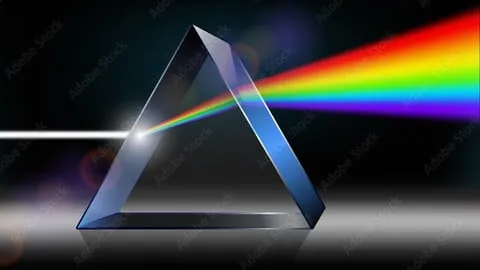
- Optical absorption, photoluminescence, and applications in LEDs and solar cells.
Magnetic & Superconducting Phenomena
- Magnetic moment origins, Curie‑Weiss law, and hysteresis loops.
- Spin‑orbit coupling and magnetocrystalline anisotropy.
- BCS theory basics, Meissner effect, and type‑I vs. type‑II superconductors.
- Emerging technologies: quantum computing qubits and magnetic levitation transport.
Defects, Imperfections & Applications
- Point defects, dislocations, grain boundaries, and their energetic considerations.
- Role of vacancies and interstitials in diffusion processes.
- Practical case studies: microchip fabrication, LED efficiency, and medical imaging devices.
- Strategies for material engineering to mitigate defect‑related failures.
Who Should Take This Course
- Undergraduate physics or materials science students seeking a deep solid‑state physics foundation.
- Engineering professionals transitioning to semiconductor or nanotechnology roles.
- Researchers preparing for solid‑state physics certification exams or doctoral qualifying tests.
- Educators who need a structured online tutorial to supplement university curricula.
- Hobbyists and self‑learners interested in the physics behind everyday electronic devices.
Prerequisites
- No prior experience needed — this course is beginner‑friendly and starts from fundamental concepts.
- Recommended familiarity with basic calculus and introductory physics enhances comprehension but is not required.
Why Enroll in This Course
Enroll now to access a free coupon that grants 100 % off for a limited time, making this high‑quality Udemy course completely free. The course’s up‑to‑date 2026 content ensures relevance to current research and industry standards. Compared with other tutorials, it combines rigorous theory, practical examples, and a certification that validates your expertise.
Course Highlights
- Lifetime access to all video lectures, quizzes, and downloadable PDFs.
- Self‑paced learning allowing you to study whenever and wherever you prefer.
- Certificate of completion that can be added to LinkedIn or CV for career advancement.
- Mobile‑friendly platform enables learning on smartphones and tablets without loss of quality.
- Real‑world case studies linking solid‑state concepts to microelectronics, energy, and medical devices.
- 30‑day money‑back guarantee ensures risk‑free enrollment if expectations are not met.
Frequently Asked Questions
Q: Is this course really free?
A: Yes, the course can be accessed at no cost using a free coupon that provides 100 % off the regular Udemy price. The coupon is available for a limited period, so enrolling
Affiliate link — we may earn a commission
Affiliate link — we may earn a commission. Learn more