Optical properties of Solids
Affiliate link — we may earn a commission. Learn more
Master the Optical Properties of Solids with Sana Muhammad din
Looking for a comprehensive and free optical properties of solids course to enhance your understanding of material science? This specialized Optical Properties of Solids Udemy course, taught by expert instructor Sana Muhammad din, provides an in-depth exploration of how light interacts with various solid materials. Updated for 2024, this training is ideal for those who want to learn optical properties of solids online, offering a blend of theoretical physics and practical engineering applications. By completing this certification course, students will gain critical insights into the behavior of electromagnetic waves, the mechanics of luminescence, and the physics behind modern photonic devices.
What You'll Learn
- Analyze the fundamental nature of light, focusing on the wave-particle duality and the critical relationship between wavelength, frequency, and energy.
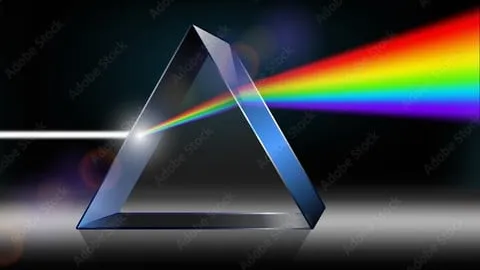
- Evaluate how light interacts with solids through the primary mechanisms of absorption, reflection, refraction, transmission, and scattering.
- Apply the mathematical laws of refraction and reflection to predict optical behavior in both natural materials and engineered technological devices.
- Classify different materials as transparent, translucent, or opaque by analyzing their transmission characteristics and internal electronic structures.
- Differentiate between complex scattering phenomena, including Rayleigh, Mie, Brillouin, and Raman scattering, and their impact on material opacity.
- Master the physical mechanisms behind luminescence, specifically the differences between fluorescence and phosphorescence in solid-state materials.
- Implement theoretical knowledge of light-matter interaction to understand the operation of LEDs, OLEDs, and fiber optic communication systems.
- Analyze the role of optical coatings and smart materials in improving energy efficiency and data transmission in modern electronics.
Course Details
- Instructor: Sana Muhammad din
- Rating: 5.0 stars (1761 reviews)
- Level: Intermediate/Advanced
- Language: English
- Enrolled students: 1761
- Certificate: Yes, upon completion
- Includes: Lifetime access, mobile-friendly content, and on-demand video lectures
What This Course Covers
Fundamentals of Electromagnetic Radiation
- Exploration of the wave-particle duality of light and its implications in quantum mechanics
- Detailed analysis of electromagnetic wave parameters including frequency and amplitude
- Understanding the relationship between photon energy and wavelength
- Establishing the foundation for light behavior in different physical environments
Light-Matter Interaction and Absorption
- Comprehensive study of the principles of absorption in various solid structures
- Analysis of the different types of absorption phenomena and their physical causes
- Investigation of key factors that influence how specific solids absorb light
- Relationship between absorption spectra and the chemical composition of materials
Refraction, Reflection, and Transmission
- Detailed examination of the laws of refraction and the bending of light
- Study of reflection types and the material-dependent factors governing reflectivity
- Analysis of light transmission and the physics of how solids allow light passage
- Classification of materials based on electronic structure into transparent, translucent, and opaque categories
Advanced Scattering Phenomena
- Deep dive into Rayleigh scattering and its role in determining the color of materials
- Understanding Mie scattering and its application in larger particle interactions
- Exploration of Brillouin and Raman scattering for material characterization
- Analysis of how scattering influences light diffusion and the perceived opacity of a solid
Luminescence and Light Emission
- Detailed study of the mechanisms behind fluorescence and the speed of emission
- Understanding phosphorescence and the nature of delayed light emission
- Analysis of the types of materials that exhibit strong luminescent properties
- Factors affecting the efficiency and intensity of light emission in solids
Real-World Optical Applications
- Application of optical properties in display technologies like LEDs, OLEDs, and LCDs
- The physics of fiber optic communication and total internal reflection
- Understanding the role of optics in solar cells and photonic sensors
- Exploration of optical coatings, medical imaging technology, and the development of metamaterials
Who Should Take This Course
- Physics Students: Undergraduate and postgraduate students focusing on solid-state physics or condensed matter physics.
- Materials Engineers: Professionals seeking to understand how the electronic structure of a material affects its optical performance.
- Photonics Researchers: Individuals working with light-based technologies, lasers, or optical fibers who need a theoretical refresher.
- Academic Researchers: Scientists in the fields of chemistry or nanotechnology investigating the light-matter interaction of new materials.
- Tech Enthusiasts: Anyone with a strong background in science who wants to understand the "how" behind OLED screens and solar panels.
Prerequisites
- Foundational Physics: A basic understanding of classical physics and introductory electromagnetism is recommended.
- Mathematics: Familiarity with basic calculus and algebraic equations to understand the laws of refraction and reflection.
- No Prior Specialized Experience: While physics knowledge helps, no previous experience in optical engineering is required to begin the course.
Why Enroll in This Course
This course offers a rare opportunity to bridge the gap between abstract quantum physics and tangible engineering applications. Because a free coupon is often available for a limited time, learners can access this high-level academic content at 100% off, making it an accessible gateway for students worldwide. Unlike generic physics tutorials, this course specifically targets the optical properties of solids, providing a specialized deep dive that is essential for careers in semiconductors and photonics. Enrolling now ensures you capture the current 5.0-star rated curriculum before the limited-time offer expires.
Course Highlights
- Comprehensive Curriculum: Covers everything from basic wave theory to advanced Raman scattering and metamaterials.
- Practical Focus: Connects theoretical physics to real-world devices like solar cells and medical imaging tools.
- Self-Paced Learning: The on-demand video format allows students to revisit complex topics like luminescence at their own speed.
- Expert Instruction: Taught by Sana Muhammad din, ensuring a structured and academic approach to the subject matter.
- Professional Certification: A certificate of completion is provided, which can be added to a LinkedIn profile or academic CV.
- Flexible Access: Mobile-friendly content ensures you can study the physics of solids from any device, anywhere.
Frequently Asked Questions
Q: Is this course really free? A: Yes, this course is available for free when a valid 100% off coupon is applied. These coupons are typically offered for a limited time to encourage new learners to join the community and experience the quality of the instruction.
Q: What will I learn in this optical properties of solids course? A: You will learn the complete lifecycle of light interaction with matter, starting from wave-particle duality and moving through absorption, reflection, and refraction. The course also covers complex scattering techniques and the physics behind modern photonic devices like OLEDs and fiber optics.
Q: Do I get a certificate after completing this course? A: Yes, upon successfully finishing all the modules and requirements, you will receive a certificate of completion. This certificate serves as proof of your knowledge in solid-state optics and can be used to enhance your professional credentials.
Q: Is this course suitable for beginners in physics? A: This course is best suited for those with an intermediate understanding of physics. While it starts with fundamentals, the topics move quickly into advanced concepts like Brillouin scattering and electronic structures, so a basic grasp of physics is highly recommended.
Q: How long do I have to enroll for free? A: Free coupon offers are usually time-sensitive and can expire quickly due to high demand. It is recommended to enroll as soon as you find an active coupon to ensure you secure lifetime access to the materials.
Final Thoughts
The Optical Properties of Solids course by Sana Muhammad din is an essential resource for anyone looking to master the complexities of light-matter interaction. Whether you are a student of condensed matter physics or a professional in materials engineering, this course provides the theoretical depth and practical context needed to excel. Start your learning journey today and uncover the physics that powers the next generation of optical technology.
Affiliate link — we may earn a commission
Affiliate link — we may earn a commission. Learn more