Electrical Properties of Solids
Affiliate link — we may earn a commission. Learn more
Electrical Properties of Solids – taught by Sana Muhammad din – is a comprehensive Udemy course that demystifies how electricity travels through different materials.
If you search for a free electrical properties of solids course, a Udemy course on electrical properties of solids, or simply want to learn electrical properties online, this 2026‑updated program delivers exactly that.
The curriculum blends band‑theory fundamentals with real‑world device examples, preparing students for academic research or industry‑level material engineering.
By the end of the course, learners can explain conductivity mechanisms and earn a Udemy certificate that validates their new expertise.
What You'll Learn
- Build a solid‑state intuition by classifying conductors, insulators, and semiconductors using band theory.
- Master charge‑transport analysis, including drift, diffusion, and carrier mobility in various solids.
- Learn how intrinsic and extrinsic semiconductors differ and why doping tailors electrical conductivity.
- Understand dielectric behavior and its impact on capacitors, transformers, and high‑frequency circuits.
- Create piezoelectric device concepts that convert mechanical stress into usable electric signals.
- Implement superconductivity principles to explain zero‑resistance phenomena in MRI machines and maglev trains.
- Apply thermoelectric theory for converting waste heat into electricity and designing solid‑state coolers.
- Analyze real‑world applications, linking material properties to sensors, energy‑harvesting systems, and modern electronics.
Course Details
- Instructor: Sana Muhammad din
- Rating: 5.0 stars (reviews not disclosed)
- Language: English (en‑US)
The course offers lifetime access to all video lessons, downloadable resources, and a mobile‑friendly learning environment, ensuring flexible study on any device.
What This Course Covers
Conductors, Insulators, and Semiconductors
- Fundamental band‑structure concepts that differentiate conductive, insulating, and semiconducting materials.
- Electrical conductivity trends across metals, alloys, and doped semiconductors.
- Role of energy gaps in governing electron flow and device performance.
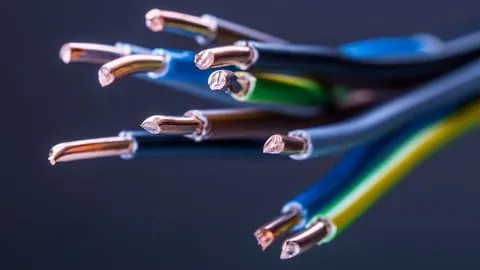
- Real‑world examples such as copper wiring, silicon chips, and polymer insulators.
Dielectric Materials
- Polarization mechanisms that allow insulators to store electric energy.
- Frequency‑dependent dielectric constant and loss tangent analysis.
- Design considerations for capacitors, high‑voltage transformers, and RF components.
- Material selection guidelines for low‑dielectric loss applications.
Piezoelectric Materials
- Crystal lattice asymmetry that generates voltage under mechanical stress.
- Common piezoelectric compounds like quartz, PZT, and lead‑free alternatives.
- Sensor and actuator design principles for medical imaging and vibration monitoring.
- Energy‑harvesting concepts for self‑powered wearable electronics.
Superconductors
- Phenomena of zero electrical resistance and Meissner effect at cryogenic temperatures.
- Type I vs. Type II superconductors and critical magnetic field considerations.
- Applications in magnetic resonance imaging, maglev transportation, and quantum computing.
- Challenges of cooling, material brittleness, and scalability.
Thermoelectric Materials
- Seebeck and Peltier effects that interconvert heat and electricity.
- Figure‑of‑merit (ZT) optimization through carrier concentration and phonon scattering control.
- Waste‑heat recovery strategies for automotive and industrial processes.
- Emerging solid‑state cooling technologies for electronics and
Affiliate link — we may earn a commission
Affiliate link — we may earn a commission. Learn more