
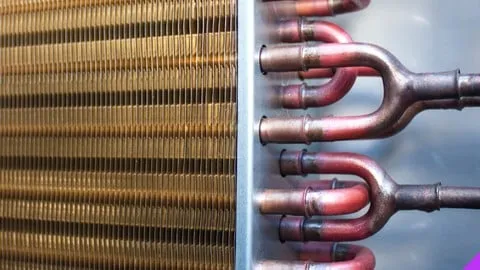
Heat and Mass Transfer HMT for Mechanical Engineering
Affiliate link — we may earn a commission. Learn more
Master Heat and Mass Transfer HMT for Mechanical Engineering
Looking for a comprehensive and free heat and mass transfer course to boost your engineering skills? The Heat and Mass Transfer HMT for Mechanical Engineering course, taught by expert instructor J Aatish Rao, is now available on Udemy. Updated for 2024, this professional training allows students to learn heat and mass transfer online through a structured academic approach. This course is specifically designed to help mechanical engineers master the critical thermal physics required for industrial applications and academic certification.
What You'll Learn
- Master the fundamental modes of heat transfer and the governing laws that dictate thermal energy movement.
- Analyze thermal conductivity and the specific mechanisms of heat conduction within various gases.
- Apply Fourier's law and the electrical analogy of heat transfer to solve complex thermal resistance problems.
- Calculate the critical radius of insulation to optimize heat loss in piping and cylindrical systems.
- Build mathematical models for heat generation within slabs and cylinders to predict temperature distributions.
- Evaluate forced and natural convection heat transfer using dimensionless numbers like Reynolds, Prandtl, and Nusselt numbers.
- Design efficient heat exchangers by implementing LMTD (Log Mean Temperature Difference) and NTU (Number of Transfer Units) methods.
- Implement the laws of thermal radiation and shape factors to determine radiation heat exchange between surfaces.
Course Details
- Instructor: J Aatish Rao
- Rating: 4.0 stars
- Enrolled students: 14,559
- Level: Beginner to Intermediate
- Language: English
- Certificate: Yes, upon completion
- Includes: Lifetime access, mobile-friendly content, and on-demand video lectures
What This Course Covers
Fundamentals of Heat Conduction
- Detailed interpretation of Fourier's law and its application in steady-state conduction
- Analysis of thermal conductivity and how heat behaves in gaseous mediums
- Implementation of the electrical analogy to simplify heat transfer circuits
- Study of the critical radius of insulation for optimizing industrial thermal cladding
- Mathematical derivations for heat generation in slab and cylindrical geometries
- Evaluation of fins and extended surfaces for enhanced heat dissipation
- Analysis of unsteady and transient conduction for time-dependent thermal problems
Convection Heat Transfer Mechanisms
- Exploration of forced convection heat transfer and its industrial drivers
- Application of key dimensionless numbers: Reynolds Number, Prandtl Number, and Nusselt Number
- Study of incompressible flow over flat surfaces and boundary layer development
- Analysis of the Hydraulic Boundary Layer (HBL) and Thermal Boundary Layer (TBL)
- Evaluation of forced convection within pipes and ducts for fluid cooling systems
- Comprehensive study of free and natural convection driven by buoyancy forces
Heat Exchanger Design and Analysis
- Classification of various types of heat exchangers used in mechanical systems
- Application of the First Law of Thermodynamics to thermal exchange processes
- Comparison and calculation of LMTD for parallel flow and counter-flow configurations
- Utilization of the NTU (Number of Transfer Units) method for performance prediction
- Analysis of the fouling factor and its impact on heat exchanger efficiency over time
- Selection criteria for different heat exchanger types based on fluid properties
Thermal Radiation Principles
- Understanding surface properties including absorptivity, reflectivity, and transmissivity
- Study of the fundamental laws of thermal radiation and their physical implications
- Calculation of shape factors for complex geometric configurations
- Analysis of radiation heat exchange between gray and black bodies
- Application of radiation principles to high-temperature engineering environments
Who Should Take This Course
- Mechanical Engineering Undergraduates who need a structured approach to master their university HMT syllabus.
- Graduate Students specializing in thermal sciences who require a refresher on fundamental conduction and convection laws.
- Academic Learners who are currently taking Heat and Mass Transfer as a core subject and want to improve their grades.
- Aspiring Thermal Engineers who want to understand the "ins and outs" of HMT for real-world industrial applications.
- Professional Engineers looking to transition into HVAC, power plant, or automotive cooling roles.
Prerequisites
- Basic knowledge of Thermodynamics: A preliminary understanding of the First Law of Thermodynamics is recommended.
- Fundamental Mathematics: Familiarity with basic calculus and algebra for following the course derivations.
- No advanced prior experience in heat transfer is needed — this course is beginner-friendly and starts from the basics.
Why Enroll in This Course
This course provides a high-value academic resource for anyone struggling with the complexities of thermal sciences. By utilizing a free coupon, learners can access this professional-grade training 100% off for a limited time, making it an accessible entry point for students worldwide. The course stands out because it balances theoretical derivations with practical numerical problems, ensuring that learners can actually apply the formulas in an exam or industrial setting. Given the current demand for energy-efficient design, mastering these HMT concepts is essential for any modern mechanical engineer.
Course Highlights
- Comprehensive Academic Alignment: The syllabus is specifically tailored to match university requirements for mechanical engineering degrees.
- Step-by-Step Derivations: Instead of just providing formulas, the course teaches the "how" and "why" through clear mathematical derivations.
- Practical Numerical Examples: Includes real-world problems that help students bridge the gap between theory and application.
- Self-Paced Learning: The on-demand video format allows students to revisit complex topics like NTU or Transient Conduction as many times as needed.
- Visual Learning Aids: Uses interactive explanations and visual aids to simplify the concept of boundary layers and radiation shape factors.
- Professional Certification: Earn a certificate of completion to validate your expertise in Heat and Mass Transfer on your resume or LinkedIn profile.
Frequently Asked Questions
Q: Is this course really free? A: Yes, this course is available for free when you use a limited-time 100% off coupon. Once enrolled via the coupon, you receive full access to all the course materials and the certificate upon completion.
Q: What will I learn in this Heat and Mass Transfer course? A: You will master the three primary modes of heat transfer: conduction, convection, and radiation. Additionally, you will learn how to design and analyze heat exchangers using industry-standard methods like LMTD and NTU.
Q: Do I get a certificate after completing this course? A: Yes, Udemy provides a certificate of completion once you have watched all the required lectures and finished the course. This serves as a great addition to your academic portfolio.
Q: Is this course suitable for absolute beginners? A: Absolutely. While a basic understanding of thermodynamics is helpful, the instructor begins with the fundamental governing laws, making it ideal for undergraduate students just starting their HMT journey.
Q: How long do I have to enroll for free? A: Free coupons are usually available for a very limited time or for a specific number of redemptions. It is recommended to enroll as soon as possible to secure your lifetime access.
Final Thoughts
The Heat and Mass Transfer HMT for Mechanical Engineering course is an essential resource for anyone looking to excel in thermal sciences. Whether you are a student aiming for academic success or a professional refining your skills, J Aatish Rao provides the depth and clarity needed to master this challenging topic. Start your learning journey today and build a strong foundation in one of the most critical pillars of mechanical engineering.
Affiliate link — we may earn a commission
Affiliate link — we may earn a commission. Learn more