Ultimate DevOps & Cloud Engineering Practice Tests: 200 Q&A
Affiliate link — we may earn a commission. Learn more
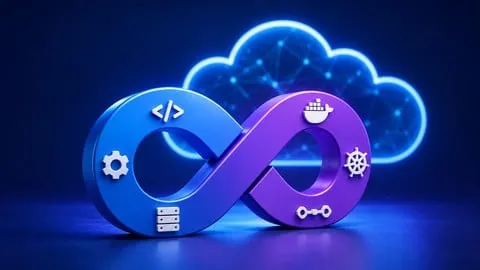
Ultimate DevOps & Cloud Engineering Practice Tests: 200 Q&A by Himanshu Kaushik is a comprehensive Udemy course that lets you master DevOps and cloud engineering concepts through realistic exam‑style questions. The course targets learners searching for a free DevOps course, Udemy DevOps training, or how to learn cloud engineering online in 2026. With 200 curated Q&A, detailed explanations, and coverage of AWS, Kubernetes, Docker, Terraform, and Linux troubleshooting, you gain the practical skills needed to ace certifications and technical interviews.
What You'll Learn
- Build end‑to‑end AWS cloud architectures using EC2, VPC, IAM, and serverless services.
- Master container orchestration fundamentals with Docker, Kubernetes, and Helm chart deployment.
- Learn Infrastructure as Code (IaC) techniques by writing Terraform modules and Ansible playbooks.
- Understand CI/CD pipeline creation with GitHub Actions, Jenkins, and automated testing frameworks.
- Create resilient monitoring and observability setups using CloudWatch, Prometheus, and Grafana.
- Implement Linux system troubleshooting, DNS resolution, and network protocol analysis for cloud environments.
- Apply best‑practice security configurations across AWS, Kubernetes, and container registries.
- Analyze real‑world scenario questions to gauge readiness for DevOps, Cloud Engineer, and CKA/CKAD exams.
Course Details
- Instructor: Himanshu Kaushik
- Rating: 4.6 stars (based on student reviews)
- Level: All Levels
- Language: English (en‑US)
- Certificate: Yes, upon completion
- Includes: Lifetime access, mobile‑friendly video playback, detailed answer explanations for every practice question
What This Course Covers
AWS Cloud Fundamentals
- Core AWS architecture principles, including regions, availability zones, and cost optimization.
- Serverless computing with Lambda, API Gateway, and DynamoDB.
- IAM policies, roles, and fine‑grained permission management.
- Real‑world case study: designing a multi‑tier web application on AWS.
Container Orchestration
- Docker container lifecycle, image creation, and registry management.
- Kubernetes cluster setup, pod scheduling, and service discovery.
- Helm chart templating for repeatable deployments.
- Hands‑on scenario: scaling a microservices application with Kubernetes autoscaling.
Infrastructure as Code (IaC)
- Terraform state management, modules, and workspace strategies.
- Writing reusable Ansible playbooks for configuration management.
- Integrating IaC with CI pipelines for automated provisioning.
- Lab exercise: provisioning a full‑stack environment using Terraform and Ansible.
CI/CD Pipelines & Automation
- Building pipelines with Jenkins, GitHub Actions, and GitLab CI.
- Automated testing, artifact storage, and blue‑green deployments.
- Secrets management and secure credential handling.
- Example workflow: end‑to‑end deployment from code commit to production release.
Linux Troubleshooting & SRE Monitoring
- Linux command‑line diagnostics, log analysis, and performance tuning.
- DNS resolution troubleshooting and network packet inspection with Wireshark.
- Monitoring metrics, alerting policies, and SRE incident response practices.
- Practical drill: diagnosing a failing service in a cloud‑native environment.
Practice Test Suite
- 200 realistic multiple‑choice questions covering all major DevOps topics.
- Detailed rationales for each answer, highlighting common pitfalls.
- Self‑assessment tools to track progress and identify knowledge gaps.
- Exam‑style timing simulations to build confidence for certification exams.
Who Should Take This Course
- Aspiring DevOps engineers preparing for entry‑level or senior roles.
- Cloud architects seeking hands‑on practice for AWS certification exams.
- System administrators transitioning to container‑orchestrated environments.
- Software developers who need to integrate CI/CD pipelines into their workflows.
- Technical interview candidates targeting SRE, DevOps, or Cloud Engineer positions.
Prerequisites
- No prior experience needed — this course is beginner‑friendly and covers fundamentals before advancing.
- Basic familiarity with command‑line interfaces (Linux or macOS) is helpful but not required.
- Recommended: a free Udemy account to access the practice tests and video lectures.
Why Enroll in This Course
This Udemy offering delivers a free coupon for a 100 % off price, but the discount is limited time and may expire soon, so act now. The curriculum blends theory with 200 practice questions, giving you a testing ground that most standalone tutorials lack. Compared with other DevOps training, the course provides detailed answer explanations, ensuring you understand why an answer is correct, not just what to memorize.
Course Highlights
- Lifetime access to all video lectures, practice questions, and updates.
- Self‑paced learning allows you to study whenever and wherever you want.
- Certificate of completion adds credibility to your LinkedIn profile and résumé.
- Mobile‑friendly content lets you review concepts on smartphones or tablets.
- Comprehensive coverage of AWS, Docker, Kubernetes, Terraform, CI/CD, and Linux troubleshooting.
- Detailed explanations for each question help you internalize concepts and avoid common mistakes.
Frequently Asked Questions
Q: Is this course really free?
A: Yes, the Udemy platform currently offers a free coupon that reduces the price to $0, providing full access to all course materials at no cost.
Q: What will I learn in this DevOps & Cloud Engineering course?
A: You will master AWS architecture, container orchestration with Docker and Kubernetes, Infrastructure as Code using Terraform and Ansible, CI/CD pipeline creation, and Linux system troubleshooting, all reinforced through 200 practice questions.
Q: Do I get a certificate after completing this course?
A: A Udemy certificate of completion is awarded once you finish all lectures and practice tests, which you can share on professional networks or include in job applications.
Q: Is this course suitable for beginners?
A: Absolutely. The material starts with core concepts and progressively advances, making it appropriate for beginners as well as experienced professionals seeking certification preparation.
Q: How long do I have to enroll for free?
Affiliate link — we may earn a commission
Affiliate link — we may earn a commission. Learn more