Horse Colic: Emergency Management & Life-Saving Decisions
Affiliate link — we may earn a commission. Learn more
Horse Colic: Emergency Management & Life-Saving Decisions
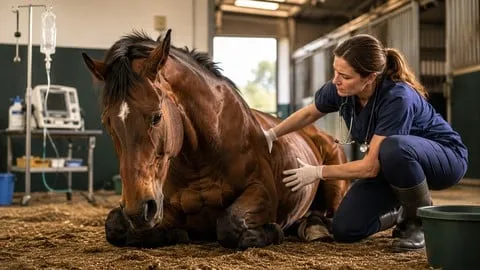
If you are looking for a comprehensive and free horse colic course to improve your equine care skills, the "Horse Colic: Emergency Management & Life-Saving Decisions" course taught by Mohamed AL ashram is an excellent resource. This specialized horse colic Udemy course is designed to help owners and professionals learn horse colic management online, providing critical knowledge to save animals during gastrointestinal crises. Updated for 2024, this course offers a clinical approach to one of the most dangerous conditions in equine medicine, ensuring that learners can make fast, informed decisions when every minute counts.
What You'll Learn
- Master the complexities of the equine gastrointestinal tract (GIT) anatomy to understand where issues originate.
- Analyze colic motility patterns to identify abnormal intestinal movement and potential obstructions.
- Recognize early and advanced clinical findings of colic to ensure rapid intervention.
- Implement precise fluid therapy protocols to stabilize dehydrated or shock-prone horses.
- Understand the critical criteria used to decide between medical treatment and emergency surgery.
- Apply a structured, problem-solving clinical approach to assess and manage colic cases in real-time.
- Evaluate the role of bacterial endotoxins and fluid dynamics in the progression of life-threatening colic.
- Develop the confidence to make life-saving decisions regarding treatment and veterinary referral.
Course Details
- Instructor: Mohamed AL ashram
- Rating: 4.0 stars
- Level: Beginner to Advanced
- Language: English (en-US)
- Certificate: Yes, upon completion
- Includes: Lifetime access, mobile-friendly content
What This Course Covers
Equine Gastrointestinal Anatomy and Physiology
- Detailed exploration of the horse's unique digestive system and how it differs from other mammals.
- Analysis of the small stomach capacity and the biological inability of horses to vomit.
- Study of the large colon structure, focusing on the pelvic flexure as a common site for impactions.
- Identification of the specific anatomical vulnerabilities that make horses susceptible to colic.
Pathophysiology of Colic Syndromes
- Understanding colic as a clinical syndrome rather than a single disease.
- Examination of colic motility patterns and how they change during different types of colic.
- The impact of ingesta movement and the risks associated with intestinal stasis.
- Analysis of how bacterial endotoxins enter the bloodstream and lead to systemic deterioration.
Clinical Assessment and Diagnosis
- Identification of early warning signs, such as pawing, rolling, and restlessness.
- Interpretation of advanced clinical findings that indicate a surgical emergency.
- Application of a structured clinical thinking process to categorize the severity of the case.
- Evaluation of risk factors that predispose certain horses to recurrent colic episodes.
Emergency Management and Fluid Therapy
- The science of fluid dynamics and why aggressive fluid therapy is vital for survival.
- Practical implementation of fluid therapy to maintain perfusion to vital organs.
- Understanding the relationship between dehydration, endotoxemia, and gut motility.
- Strategies for stabilizing a horse before transport to a surgical facility.
Treatment and Surgical Decision Making
- Overview of medical treatments used to resolve non-surgical colic cases.
- Critical analysis of when medical management fails and surgery becomes the only option.
- The role of the veterinarian in making the final call for surgical intervention.
- Understanding the general process of equine colic surgery and the goals of the procedure.
Who Should Take This Course
- Horse Owners: Individuals who want to be able to recognize the signs of colic early to save their animals' lives.
- Veterinary Students: Students looking for a clinical, problem-solving perspective on equine gastrointestinal emergencies.
- Equine Practitioners: Veterinarians seeking a refresher on the latest approaches to fluid therapy and colic management.
- Horse Riders and Stable Managers: Anyone responsible for the daily care of horses who needs to act as the first line of defense.
- Animal Care Enthusiasts: People passionate about equine welfare who want to understand the medical complexities of horse health.
Prerequisites
- No prior experience needed — this course is beginner-friendly and accessible to anyone who loves horses.
- A basic understanding of horse behavior is helpful but not required.
- For veterinary students, a foundational knowledge of basic anatomy is recommended but the course provides comprehensive reviews.
Why Enroll in This Course
Equine colic is a time-sensitive emergency where the difference between life and death often depends on the speed and accuracy of the initial response. This course provides a high-value clinical framework that transforms theoretical knowledge into actionable, life-saving skills. Because a free coupon is often available for a limited time, you can access this professional training 100% off, making it an accessible way to gain expert-level insights. By enrolling now, you ensure that you are prepared for the worst-case scenario, potentially saving a horse's life through better recognition and faster decision-making.
Course Highlights
- Clinical Problem-Solving Approach: Rather than just listing facts, the course teaches you how to think like a veterinarian during a crisis.
- Comprehensive Anatomy Review: Provides a deep dive into the GIT, ensuring you understand the "why" behind the symptoms.
- Life-Saving Focus: Specifically targets the most critical decisions that determine the outcome of a colic case.
- Self-Paced Learning: The on-demand video format allows you to study the material at your own speed.
- Certification of Completion: Earn a certificate that validates your knowledge of equine emergency management.
- Mobile-Friendly Access: Study the materials on your phone or tablet, allowing for quick reference in a stable environment.
Frequently Asked Questions
Q: Is this course really free? A: Yes, this course is available for free when you use a limited-time 100% off coupon. These coupons are offered periodically to help students and horse owners access critical medical knowledge without financial barriers.
Q: What will I learn in this horse colic course? A: You will learn everything from basic equine gastrointestinal anatomy to the advanced clinical signs of colic. The course covers how to manage fluid therapy, how to recognize when surgery is necessary, and how to apply a structured clinical approach to equine emergencies.
Q: Do I get a certificate after completing this course? A: Yes, upon successfully completing all the modules and requirements, you will receive a certificate of completion. This certificate serves as proof of your training in equine emergency management and colic decision-making.
Q: Is this course suitable for beginners who have never owned a horse? A: Absolutely. While it is highly valuable for veterinarians, the content is presented in a way that is accessible to beginners. It starts with the basics of anatomy and builds up to complex emergency decisions, making it a great starting point for any horse lover.
Q: How long do I have to enroll for free? A: Free coupons for Udemy courses are typically limited by time or a maximum number of redemptions. It is highly recommended to enroll as soon as possible to secure your lifetime access before the promotional period expires.
Final Thoughts
Whether you are a seasoned veterinarian or a first-time horse owner, "Horse Colic: Emergency Management & Life-Saving Decisions" provides indispensable knowledge for anyone involved in equine care. By mastering the signs and management strategies of this deadly condition, you can significantly increase the chances of survival for the horses in your care. Start your learning journey today and gain the confidence to handle equine emergencies with precision and calm.
Affiliate link — we may earn a commission
Affiliate link — we may earn a commission. Learn more