Applied Veterinary Ethology
Affiliate link — we may earn a commission. Learn more
Master Animal Behavior with Applied Veterinary Ethology
Looking for a comprehensive and free Applied Veterinary Ethology course to enhance your clinical skills? This Applied Veterinary Ethology Udemy course, taught by instructor Mohamed AL ashram, provides a scientific approach to understanding animal behavior to improve medical outcomes. Updated May 2024, this training allows you to learn animal behavior online, focusing on the critical intersection of ethology and veterinary medicine to ensure better animal welfare and more accurate diagnoses. By mastering these behavioral signals, veterinary professionals can significantly improve their approach to animal handling, restraint, and overall patient care.
What You'll Learn
- Master the fundamental principles of veterinary ethology to better interpret the physical and emotional states of various animal species.
- Analyze the critical distinctions between general ethology and special ethology to apply the right behavioral framework to different clinical scenarios.
- Implement behavior-based management strategies that reduce stress and anxiety for animals in clinical and farm settings.
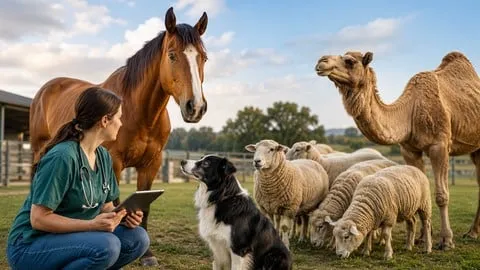
- Understand species-specific behaviors for horses, camels, sheep, pigs, dogs, and laboratory animals to ensure safe and effective handling.
- Evaluate animal welfare by utilizing scientific behavioral indicators and perception metrics to identify suffering or distress.
- Identify early signs of pain, fear, and stress in patients, allowing for faster intervention and improved treatment plans.
- Apply ethological concepts to animal restraint and handling techniques to minimize aggression and improve safety for both the handler and the animal.
- Develop the ability to recognize behavioral disorders and vices in companion and livestock animals, implementing effective prevention and management strategies.
Course Details
- Instructor: Mohamed AL ashram
- Rating: 3.5 stars
- Level: Beginner to Intermediate
- Language: English
- Certificate: Yes, upon completion
- Includes: Lifetime access, mobile-friendly content
What This Course Covers
Foundations of Veterinary Ethology
- Understanding the scientific study of animal behavior within a clinical context
- Comparing general ethology (universal behaviors) with special ethology (species-specific traits)
- Developing systematic methods for behavioral observation and data collection
- Exploring the role of ethology in improving diagnostic accuracy in veterinary medicine
- Analyzing the relationship between an animal's environment and its behavioral responses
Communication and Social Organization
- Identifying key behavioral indicators used by animals to communicate health and emotion
- Studying the social hierarchies and organizational structures of different species
- Analyzing how animals perceive their surroundings through various sensory modalities
- Understanding the impact of social isolation versus social integration on animal health
- Learning to decode subtle communication signals to prevent aggression during examinations
Learning and Reproductive Behavior
- Exploring the mechanisms of animal learning and how they apply to behavior modification
- Analyzing reproductive behaviors and their influence on animal management
- Studying maternal behavior and its impact on the development of young animals
- Understanding the hormonal and environmental triggers that drive specific behaviors
- Implementing positive reinforcement techniques based on ethological principles
Species-Specific Behavioral Analysis
- Horses: Detailed study of equine social dynamics, flight responses, and common stable vices
- Camels: Understanding the unique behavioral characteristics and handling requirements of camelids
- Livestock (Sheep & Pigs): Analyzing herd behavior, stress responses, and management needs for small ruminants and swine
- Companion Animals (Dogs): Mastering canine communication, stress signals, and common behavioral issues
- Laboratory Animals: Studying the behavioral needs and welfare indicators of animals used in research
Clinical Application and Welfare Assessment
- Utilizing behavioral cues to perform comprehensive welfare assessments
- Recognizing the physiological and behavioral markers of pain and distress
- Implementing "low-stress" handling and restraint techniques to improve patient cooperation
- Analyzing how disease and illness alter normal behavior patterns
- Developing a framework for ethical decision-making based on animal behavioral needs
Management of Behavioral Disorders
- Identifying common behavioral vices in farm animals and their underlying causes
- Developing strategies to prevent the onset of abnormal repetitive behaviors
- Managing aggression and fear-based behaviors in companion animals
- Creating environmental enrichment plans to reduce boredom and stress-induced disorders
- Bridging the gap between theoretical ethology and practical clinical management
Who Should Take This Course
- Veterinary Students: Those preparing for clinical training who want a scientific edge in understanding patient behavior.
- Practicing Veterinarians: Professionals seeking to strengthen their behavioral knowledge to improve diagnosis and animal handling.
- Biology and Zoology Students: Individuals majoring in animal sciences who wish to specialize in ethological applications.
- Animal Care Professionals: Shelter managers, technicians, and groomers who interact daily with stressed or fearful animals.
- Psychology Students: Those interested in comparative psychology and the behavioral patterns of non-human animals.
Prerequisites
- No prior experience in ethology is needed — this course is designed to be beginner-friendly.
- A basic understanding of animal anatomy or a general interest in veterinary science is recommended but not required.
- A passion for animal welfare and a desire to improve the human-animal bond in a clinical setting.
Why Enroll in This Course
Veterinary medicine is not just about treating the body; it is about understanding the patient. This course fills a critical gap in traditional veterinary education by providing a scientific framework for interpreting animal behavior. By utilizing a free coupon for a limited time, students can access this specialized knowledge 100% off, making it an accessible entry point for those transitioning into animal welfare roles. Given the current demand for "low-stress handling" in modern clinics, this course provides a competitive advantage for anyone entering the veterinary field today.
Course Highlights
- Lifetime Access: Enroll once and have permanent access to all video lectures and materials for future reference.
- Self-Paced Learning: Move through the modules at your own speed, making it ideal for busy veterinary students or working professionals.
- Certification of Completion: Receive a certificate that validates your knowledge of applied veterinary ethology for your portfolio.
- Multi-Species Approach: Unlike courses that focus only on pets, this training covers livestock, laboratory animals, and companion species.
- Clinical Focus: The content is specifically tailored for veterinary applications rather than purely theoretical biological study.
- Mobile-Friendly Content: Study on the go via the Udemy app, allowing you to review behavioral signs while in the field or clinic.
Frequently Asked Questions
Q: Is this course really free? A: Yes, this course is available for free when you use a valid limited-time coupon. These coupons provide 100% off the enrollment fee, allowing you to access the full curriculum without cost.
Q: What will I learn in this Applied Veterinary Ethology course? A: You will learn how to scientifically observe and interpret animal behavior across multiple species, including horses, dogs, and livestock. The course focuses on using these behavioral insights to improve animal welfare, refine handling techniques, and assist in clinical diagnoses.
Q: Do I get a certificate after completing this course? A: Yes, upon completing all the required modules and lectures, you will receive a certificate of completion. This can be a valuable addition to your CV, especially for those applying for roles in animal care or veterinary clinics.
Q: Is this course suitable for absolute beginners? A: Absolutely. The course is designed to introduce the principles of ethology from the ground up, meaning no prior background in animal behavior is required. It is perfect for students just beginning their journey in veterinary or biological sciences.
Q: How long do I have to enroll for free? A: Free coupons are typically available for a very limited time and have a maximum number of redemptions. It is recommended to enroll as soon as possible to secure your lifetime access before the promotion expires.
Final Thoughts
The Applied Veterinary Ethology course is an essential resource for anyone dedicated to the health and happiness of animals. By blending scientific theory with practical clinical application, Mohamed AL ashram provides a roadmap for improving the way humans interact with their animal patients. Whether you are a student or a seasoned professional, mastering the art of animal behavior is the key to superior veterinary care. Start your learning journey today and transform the way you perceive and treat the animals in your care.
Affiliate link — we may earn a commission
Affiliate link — we may earn a commission. Learn more