Certificación Python PCAP: Associate Python Programmer
Affiliate link — we may earn a commission. Learn more
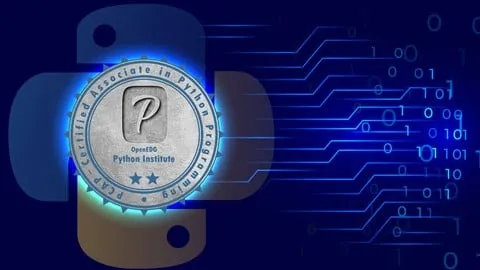
Certificación Python PCAP: Associate Python Programmer – taught by Alvaro Chirou, is a comprehensive Udemy training that prepares you for the globally‑recognized PCAP exam. Updated July 2026, this free Python PCAP course covers advanced programming concepts, module creation, error handling, and object‑oriented design. Whether you search for a “free Python course,” “Python Udemy course,” or “learn Python online,” this curriculum delivers the practical skills and certification‑ready knowledge that employers value.
What You'll Learn
- Build real‑world Python programs that satisfy every PCAP exam objective.
- Master advanced Python topics such as modules, packages, and exception handling.
- Learn how to design and implement object‑oriented solutions using Python classes.
- Understand Python’s string manipulation techniques and their application in data processing.
- Create your own reusable modules and packages to streamline larger projects.
- Implement comprehensive practice tests that mimic the PCAP certification format.
- Apply logical problem‑solving strategies to solve Python coding challenges efficiently.
- Analyze Python’s OOP paradigms and compare them with functional programming approaches.
Course Details
- Instructor: Alvaro Chirou
- Rating: 4.7 stars (based on student reviews)
- Language: Español (es‑ES)
- Certificate: Yes, upon completion
- Includes: Lifetime access, mobile‑friendly videos, downloadable resources
What This Course Covers
1. Introduction & Development Environment
- Overview of the PCAP certification structure and exam objectives.
- Step‑by‑step setup of a Python development environment on Windows, macOS, and Linux.
- Guidance on using IDEs, virtual environments, and package managers.
- Tips for navigating the Udemy platform and tracking progress.
2. Modules & Packages Fundamentals
- Explanation of Python modules, import statements, and namespace management.
- Exploration of standard library modules most relevant to the PCAP exam.
- Hands‑on creation of custom modules and hierarchical packages.
- Exercises that reinforce module reuse and code organization.
3. Error Handling & Exceptions
- Detailed look at Python’s exception hierarchy and common error types.
- Techniques for raising, catching, and propagating exceptions safely.
- Best practices for writing robust, fault‑tolerant code.
- Practical labs that simulate real‑world debugging scenarios.
4. Working with Text Strings
- Mastery of string literals, formatting, and concatenation methods.
- Use of regular expressions for pattern matching and data extraction.
- Unicode handling and encoding considerations for international applications.
- Mini‑projects that manipulate CSV files and log data using string operations.
5. Object‑Oriented Programming (OOP) in Python
- Core concepts: classes, objects, inheritance, and polymorphism.
- Implementation of special methods (
__init__,__str__,__repr__). - Design patterns that align with Pythonic OOP best practices.
- Case studies illustrating OOP in web scraping, API clients, and data models.
6. PCAP Practice Exams & Simulations
- Full‑length mock exams that replicate the timing and format of the official test.
- Detailed answer explanations and reference to the PCAP syllabus.
- Adaptive quizzes that focus on weak areas identified during practice.
- Strategies for exam day, including time management and question analysis.
Who Should Take This Course
- Students preparing for the official PCAP Associate Python Programmer certification.
- Junior developers who have completed the PCEP exam and want to deepen their Python expertise.
- Data analysts seeking to validate their programming skills for analytics or AI roles.
- IT professionals transitioning to software development and needing a recognized credential.
- Self‑learners looking for a structured, exam‑focused Python training that includes real‑world projects.
Prerequisites
- No prior experience needed — this course is beginner‑friendly but assumes basic familiarity with Python syntax.
- Recommended: Completion of the PCEP – Certified Entry‑Level Python Programmer course or equivalent introductory knowledge.
- Suggested: Ability to install software on your computer and navigate a web browser.
Why Enroll in This Course
Enrolling gives you immediate access to a free coupon that unlocks 100 % off the regular price, but the offer is limited time and may expire soon. The curriculum aligns directly with the PCAP exam blueprint, ensuring every lecture contributes to your certification goal. Compared with generic Python tutorials, this training provides targeted practice tests, real‑world coding assignments, and a certificate that signals proven competence to employers.
Course Highlights
- Lifetime access to all video lessons, quizzes, and downloadable assets.
- Self‑paced learning that lets you study whenever and wherever you prefer.
- Certificate of completion that you can add to LinkedIn or your résumé.
- Mobile‑friendly design for learning on smartphones and tablets.
- 30‑day money‑back guarantee if the material does not meet your expectations.
- Dedicated instructor support through Udemy’s Q&A platform for clarifying doubts.
Frequently Asked Questions
Q: Is this course really free?
A: Yes. By applying the available Udemy coupon, you can enroll at no cost. The free access includes all videos, practice exams, and downloadable resources, but the coupon is limited and may expire, so act promptly.
Q: What will I learn in this Python PCAP course?
A: You will master advanced Python concepts such as modules, packages, exception handling, string manipulation, and object‑oriented programming. The course also provides full‑length PCAP practice exams and step‑by‑step guidance to ensure you meet every certification requirement.
Q: Do I get a certificate after completing this course?
A: Yes. Upon finishing all lectures and passing the course’s final assessment, Udemy issues a digital certificate that
Affiliate link — we may earn a commission
Affiliate link — we may earn a commission. Learn more