5G Communication System Using Matlab
Affiliate link — we may earn a commission. Learn more
5G Communication System Using Matlab – taught by Dr. Khaled Ramadan – delivers a hands‑on Udemy experience for anyone seeking a free 5G communication course. Updated July 2026, the training covers Non‑Orthogonal Multiple Access (NOMA) theory, MATLAB simulation, and performance analysis for modern wireless networks. Learners acquire practical coding skills, quantitative capacity calculations, and the ability to generate certification‑ready project reports. This free online course saves months of research by providing ready‑made MATLAB scripts and step‑by‑step explanations.
What You'll Learn
- Build MATLAB models that simulate 5G NOMA and OMA downlink and uplink scenarios.
- Master Shannon‑based channel capacity estimation for 5G communication systems.
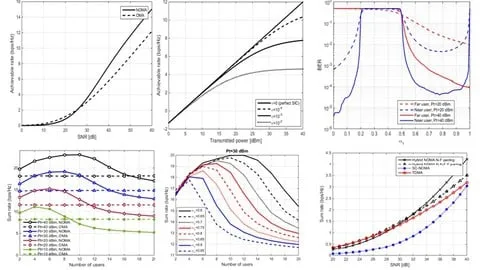
- Learn how to calculate achievable rates for NOMA versus traditional OMA techniques.
- Understand the impact of imperfect Successive Interference Cancellation (SIC) on NOMA rate capacity.
- Create fixed and dynamic power‑allocation schemes and evaluate their Bit‑Error‑Rate (BER) performance.
- Implement user‑pairing strategies that maximize the number of users supported by NOMA.
- Apply Rayleigh fading channel models to estimate outage probability and BER for 5G links.
- Analyze simulation results to validate theoretical predictions and prepare technical documentation.
Course Details
- Instructor: Dr. Khaled Ramadan
- Rating: 4.5 stars (30,325 reviews)
- Level: Intermediate (suitable for undergraduate and postgraduate engineering students)
- Language: English (en‑US)
- Enrolled students: 30,325
- Certificate: Yes, upon completion
- Includes: Lifetime access, mobile‑friendly video lectures, downloadable MATLAB source files
What This Course Covers
1. Introduction to 5G and Multiple Access Techniques
- Overview of 5G architecture and key performance indicators.
- Comparison of Orthogonal Multiple Access (OMA) and Non‑Orthogonal Multiple Access (NOMA).
- Fundamental concepts of user pairing and power domain multiplexing.
- Real‑world use cases illustrating NOMA advantages in dense networks.
2. Theoretical Foundations of NOMA
- Derivation of achievable rate formulas for uplink and downlink NOMA.
- Shannon capacity calculations for Rayleigh fading channels.
- Impact of imperfect Successive Interference Cancellation on system throughput.
- Analytical expressions for BER and outage probability under NOMA.
3. MATLAB Simulation Environment
- Setting up MATLAB workspace for 5G communication system modeling.
- Implementing channel models, including Rayleigh fading and AWGN.
- Coding fixed power allocation (FPA) and dynamic power allocation algorithms.
- Visualizing capacity, BER, and outage curves with built‑in plotting tools.
4. Performance Evaluation and Optimization
- Conducting Monte‑Carlo simulations to estimate BER across SNR ranges.
- Evaluating the effect of user pairing strategies on system capacity.
- Optimizing power allocation to minimize interference and maximize sum‑rate.
- Interpreting simulation data to guide design decisions for real‑world deployments.
5. Advanced Topics and Project Work
- Extending simulations to multi‑cell scenarios with inter‑cell interference.
- Incorporating adaptive modulation and coding schemes for link adaptation.
- Preparing a comprehensive project report that includes code, results, and analysis.
- Exploring future research directions such as massive MIMO integration with NOMA.
Who Should Take This Course
- Undergraduate electronics or communication engineering students preparing for 5G research projects.
- Postgraduate students needing MATLAB‑based simulation skills for thesis work.
- Junior wireless engineers transitioning to 5G system design roles.
- Researchers interested in NOMA theory and practical performance evaluation.
- Professionals preparing for certification exams that cover advanced multiple‑access techniques.
Prerequisites
- Basic knowledge of digital communication fundamentals and signal processing.
- Familiarity with MATLAB programming environment (no prior 5G experience required).
- Recommended: Understanding of probability theory and linear algebra for deeper analysis.
Why Enroll in This Course
This Udemy training provides a complete, free‑coupon‑enabled learning path that eliminates the cost barrier for high‑quality 5G education. The limited‑time 100 % off offer encourages immediate enrollment, allowing learners to start building MATLAB simulations today. Compared with generic tutorials, the course delivers structured modules, real‑world examples, and a certification of completion that validates practical competence.
Course Highlights
- Lifetime access to all video lectures and MATLAB source files.
- Self‑paced learning enables students to progress according to personal schedules.
- Certificate of completion adds credibility to resumes and LinkedIn profiles.
- Mobile‑friendly platform allows study on smartphones and tablets.
- Hands‑on projects that replicate industry‑standard 5G performance assessments.
- 30‑day money‑back guarantee ensures risk‑free enrollment for paid versions.
Frequently Asked Questions
Q: Is this course really free?
A: Yes, the course can be accessed at no cost when the free Udemy coupon is applied. The offer provides 100 % off the regular price for a limited period, allowing anyone to start learning without financial commitment.
Q: What will I learn in this 5G Communication System Using Matlab course?
A: You will master NOMA and OMA theory, simulate 5G channel capacity, implement power‑allocation algorithms, and evaluate BER and outage probability using MATLAB. The curriculum blends theoretical derivations with practical coding exercises.
Q: Do I get a certificate after completing this course?
A: Yes, Udemy issues a certificate of completion once you finish all lectures and assignments. This certificate can be shared with employers or added to professional networking profiles.
Q: Is this course suitable for beginners?
A: The course targets undergraduate and postgraduate students, assuming basic communication and MATLAB knowledge. Beginners with those prerequisites will find the step‑by‑step guidance appropriate for building foundational 5G simulation skills.
Q: How long do I have to enroll for free?
A: The free coupon remains valid for a limited time, typically a few days after you visit the course page. Enrolling promptly ensures you lock in the 100 % discount before the offer expires.
Final Thoughts
5G Communication System Using Matlab equips engineering students and early‑career professionals with the tools needed to simulate and analyze modern wireless networks. Enroll now to leverage the free coupon, earn a certification, and accelerate your expertise in 5G NOMA technologies. Begin your learning journey today and transform theoretical
Affiliate link — we may earn a commission
Affiliate link — we may earn a commission. Learn more